
210 읽음
Why Roh Moo-hyun Condemned Kim Dae-jung’s Regional Politics in 1995
 최보식의언론
 0
0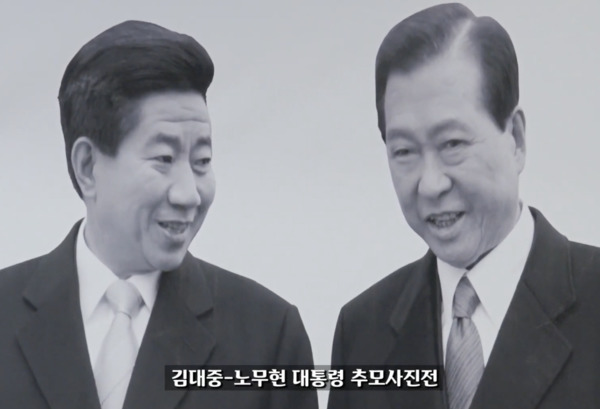
"I could not tolerate Chairman Kim Dae-jung. It was an anti-historical act, an attempt to turn back the wheels of history. DJ's theory of regional equality was precisely about treating the people, the masters of history, as 'pawns' and using them as a means to an end, while reviving the tiresome structure of regional confrontation that had obstructed political progress." — Roh Moo-hyun, Hankyoreh21
These were Roh Moo-hyun's words in 1995.
Roh, who had become a star through parliamentary hearings, ran for mayor of Busan as the Democratic Party candidate. Kim Dae-jung advocated a theory of regional equality, arguing that "equal rights among regions must be guaranteed." Why, then, did Roh criticize it as an anti-historical act that treated the people as pawns?
Kim Dae-jung's regionalism rested on the argument that the Honam region had been neglected. He cultivated the narrative of Honam's mistreatment to win elections, packaged it as the "theory of regional equality," and Park Jie-won later inherited and transformed it into the argument that Honam was being discriminated against, putting it to effective political use.
Until the 1990s, most people on both the left and the right acknowledged that Kim Dae-jung was inflaming regional sentiment. I have no need to prove it separately. The Democratic Party knows far better than anyone how deeply Kim Dae-jung was involved in regionalism.
Over the past 30 years, as Democratic Party supporters became part of society's mainstream, they quietly erased Kim Dae-jung's "past." They then shifted all responsibility onto Park Chung-hee.
If this is left unchallenged, history will be packaged as the history of the victors, and Kim Dae-jung will eventually be regarded as a great historical figure.
What I intend to write is not an attempt to prove how Kim Dae-jung stirred up regional sentiment, but to restore facts that already exist.
The argument that Honam was being mistreated began appearing prominently in the press during the sixth presidential election in 1967. Yun Bo-seon, the opposition New Democratic Party candidate, campaigned in South Jeolla Province and declared that "Honam is being treated unfairly."
"I will correct the mistreatment of Honam caused by the government's economic policies."
The following day, Park Chung-hee immediately responded during a campaign rally in Gwangju, saying, "The opposition's argument about Honam's mistreatment is an irresponsible act that drives a wedge between the government and the people."
This shows just how effective the argument about Honam's mistreatment was in elections.
Eureka! Political forces that benefited from it learned that stirring up regional sentiment could win elections.
I regard the sixth presidential election of 1967 as the beginning of the introduction of regional sentiment into politics.
Kim Dae-jung was then the spokesperson for the New Democratic Party.
The argument about Honam's mistreatment, developed at that time, became entrenched through the seventh presidential election in 1971.
It established as accepted fact a particular narrative: that the Park Chung-hee administration favored Yeongnam, promoted industrialization along the Gyeongbu axis, and left Honam behind as a food-producing base and an underdeveloped agricultural region.
But was Honam really mistreated?
On February 20, 1967, Park Chung-hee attended the groundbreaking ceremony for the Honam Oil Refinery. Reading his speech reveals the situation.
"I feel that the waters before us are a historic place where the Korean fleet commanded by our Admiral Yi Sun-sin blockaded the enemy and delivered the final blow. Four hundred years have passed since then. During those centuries, this region became a place known to some and unknown to others, and today it has become a quiet and lonely fishing village. Now, 400 years later, we, their descendants, are building a magnificent new industrial complex here for the modernization of our homeland and the industrial development of this country..."
What was there in Yeosu until 1967? A quiet fishing village.
"Regarding the location of the second oil refinery, there had been many opinions within the government that an area near the Gyeongin region, where demand for petroleum and petroleum products is greatest, might be most suitable. However, Yeosu possesses various geographical advantages, particularly its excellent natural harbor. Another consideration is the government's policy of dispersing industrial facilities throughout the country and, in particular, promoting industrial development in Honam, which today has fewer industrial facilities than other regions. We therefore concluded that the area around Yeosu would be the most appropriate location and selected this site."
If economic efficiency alone had been the consideration, the refinery should have been located near Incheon, Ulsan, or Busan, where infrastructure and supporting ports had already been developed.
Yeosu was chosen for one purpose alone: balanced regional development.
The national resources poured into the remote area of Yeosu under the Park Chung-hee administration were not merely a token gesture.
It was the largest basic-industry investment since the founding of the Republic of Korea, a project on which the nation's very future was staked.
Did we have the ability to build an oil refinery worth tens of millions of dollars?
Lucky Chemical negotiated, Park Chung-hee made the decision, and Caltex invested.
Through the Foreign Capital Inducement Act, the government provided an unlimited payment guarantee, undertaking ultimate responsibility for repaying the principal and interest on the capital and loans invested by Caltex.
If the project failed, South Korea's national finances could have collapsed. It was truly a measure that wagered the country's credit and destiny.
At the end of 1966, Lucky Chemical and Caltex concluded a 50-50 joint-venture agreement and attracted $55 million in foreign capital and loans.
The success of the Honam Oil Refinery did not end with the operation of a single plant.
Park Chung-hee continued investing in Yeosu with the aim of developing it into a world-class coastal petrochemical complex comparable to Fos-sur-Mer in France and the Kashima industrial complex in Japan.
Vertically integrated plants, including Honam Petrochemical, now Lotte Chemical, and naphtha cracking centers (NCCs), were built throughout the 1970s.
As with semiconductor factories, the engineering involved in constructing an industrial complex is itself beneficial to a country.
The experience gained from building the Yeosu Industrial Complex was later used by Hyundai Engineering & Construction in 1976 when it undertook the Jubail Industrial Port project in Saudi Arabia.
It was one of the largest construction projects of the 20th century, worth the equivalent of 25 percent of South Korea's annual national budget in 1976.
Hyundai was able to win the Jubail contract because it had acquired the technologies required to build facilities capable of accommodating 200,000-ton oil tankers, along with precision piping and precision welding, at Yeosu.
Thousands of pipefitters, welders, and engineers worked on the Yeosu Industrial Complex construction site and developed into world-class specialists.
The Yeosu Industrial Complex was a cradle of technology that enabled South Korea to make its leap onto the global industrial-plant stage.
How did Kim Dae-jung respond to this introduction of foreign capital?
Reading the National Assembly transcripts, one finds that Kim Dae-jung fiercely attacked the Foreign Capital Inducement Act and government payment guarantees, calling them "the road to national ruin through foreign loans."
Kim Dae-jung regarded all foreign loans as debts borne by the people.
It was not just Kim Dae-jung. That was the level of the opposition at the time.
Yet when that foreign capital was used to build enormous factories in Yeosu and steel mills and shipyards in Pohang and Ulsan, the opposition changed its tune.
"Why aren't you giving money to Honam?" and "You are exploiting Honam as a food-producing base," they charged, launching attacks that contradicted their earlier position.
During the seventh National Assembly in 1967, senior opposition politicians repeatedly argued in parliamentary questioning that government investment in social overhead capital and the placement of industrial complexes were concentrated in Gyeongsang Province, deliberately discriminating against Honam.
During election campaigns, smear campaigns circulated claiming that "they only built smokestacks spewing pollution in Yeosu, while handing all the truly profitable textile and processing factories to Daegu and North Gyeongsang Province, Park Chung-hee's home region."
Scholars from Honam developed this argument, presenting the region as a supplier of raw materials whose profits were siphoned off elsewhere.
According to this narrative, people in Park Chung-hee's home region were living well by producing textiles from raw materials supplied by Honam.
The oil-refining and petrochemical plants at the Yeosu Industrial Complex were the semiconductor factories of their time.
They were capital- and technology-intensive basic industries with extremely high barriers to entry.
Even after Daegu's textile industry, whose workers had spent their nights operating sewing machines, went into decline, the Yeosu Industrial Complex remained an enormous base of industrial capital generating substantial local tax revenues.
It was a project at the forefront of the worldwide boom in heavy-chemical industrial complexes being built around the same time.
It was comparable to Japan's Kashima complex (1965–1971), Singapore's Pulau Ayer Chawan (1968–1973), France's Fos-sur-Mer (1965–1974), and Saudi Arabia's Jubail (1976–1980).
Hyundai Engineering & Construction's enormous contract for the Jubail Industrial Port in Saudi Arabia was worth $940 million.
More than $1 billion was invested in Yeosu throughout the 1970s.
Is this what mistreatment of Honam looks like?
The only person who was mistreated was Park Chung-hee.
Some scholars, when discussing Kim Dae-jung's regionalism, suddenly change direction.
A representative argument goes like this:
"Yeongnam's regionalism was preemptive and aggressive, while Honam's was defensive, protective, and resistant." — Former Yeungnam University professor Kim Tae-il
This is like childish wordplay.
The same action is bad when you do it, but right when I do it.
This is not the language of scholarship.
It lacks consistent standards and attempts to pass moral judgment from a self-centered perspective.
Their worldview is childish, and they are not even embarrassed to utter such childish things.
Their argument amounts to saying that Kim Dae-jung also fostered and exploited regionalism, but did so defensively, as a means of resistance.
Regional sentiment grew out of accumulated conflict between two regions, and both sides exploited it.
Presenting one side as an entirely innocent victim is a distortion.
Honam was a victim of regional sentiment, but Kim Dae-jung benefited from that very sentiment.
I see the relationship between Honam and Kim Dae-jung as analogous to the relationship between the Gaza Strip and Hamas.
The Palestinians may appear to be the weaker side, but whenever an opportunity for reconciliation arose, armed provocations derailed negotiations.
In 1993, when Yasser Arafat and Yitzhak Rabin concluded the Oslo Accords, Hamas carried out a series of suicide bombings in Israeli cities.
Eventually, the pro-peace government collapsed, and Benjamin Netanyahu came to power in 1996.
In 2000, when Ehud Barak and Arafat held negotiations mediated by Bill Clinton, suicide bombings followed again.
This was the Second Intifada.
Eventually, Israel's moderates were defeated.
In 2005, Ariel Sharon withdrew Israeli settlements and troops from the Gaza Strip and handed over self-governing authority.
Hamas drove out the moderate Fatah faction and began launching Qassam rockets.
Does Hamas suffer from an inability to control its anger?
No.
The more intense the conflict with Israel became, the more firmly Hamas consolidated its power.
While civilians in Gaza suffered extreme poverty and the hardships of the blockade, Hamas's leadership was divided between an internal ruling faction and a luxurious exile faction, maintaining the organization's stability and its hold on power.
The problem is that such a distorted structure eventually reaches its end.
In 2023, as Saudi Arabia and Israel were moving toward normalization of diplomatic relations, Hamas attacked a music festival and kibbutzim, killing 1,200 Israeli civilians.
Until it was devastated afterward, it was a system that had functioned quite rationally.
Hamas built underground bunkers beneath hospitals where civilians were receiving treatment and held hostages there.
Everyone became a hostage to the danger of Israeli bombardment.
As Roh Moo-hyun said, Kim Dae-jung "treated the people, the masters of history, as 'pawns' and used them as a means to an end."
He did so by constantly indoctrinating Honam residents with the message that they were victims who had been mistreated.
This gaslighting worked, and Honam became Kim Dae-jung's political fiefdom.
Kim Dae-jung stirred up regional conflict in a sophisticated manner, while people like Roh Moo-hyun, who challenged it without fully understanding the situation, ended up suffering the consequences and losing elections.
And what did Honam gain from all this?
It was no different from the Gaza Strip.
It acquired an enemy it would have to hate forever.
It was also bound to an endless struggle against that enemy.
This is not a political worldview.
It is captivity within a mythical world divided into good and evil.
This is the perspective from which I view Kim Dae-jung and regional sentiment.
Examining, one by one, Kim Dae-jung's actions, circumstances, and statements from a perspective sympathetic to the Democratic Party, I found that the reality was very different.
At some point, criticism of Kim Dae-jung's actions came to be distorted into something considered morally wrong.
#KimDaeJung #RohMooHyun #RegionalPolitics
* This article has been translated by ChatGPT.