
1,256 읽음
세계 경제에 '인플레 공습'... 중동發 에너지 쇼크에 물가 꿈틀
 최보식의언론
 0
0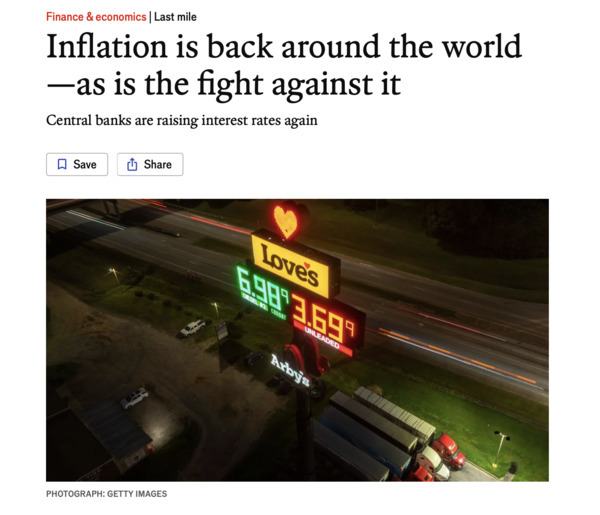
영국 이코노미스트는 6일 ‘Inflation is back around the world-as is the fight against it’(전 세계에 인플레이션이 돌아왔다…물가와의 싸움도 다시 시작됐다)라는 제목의 기사에서 “전 세계 중앙은행들이 다시 금리를 올리기 시작했다”고 보도했다.
이코노미스트는 “세계 경제는 새로운 금리 인상 사이클에 들어설 가능성이 커지고 있다”며 “끝난 줄 알았던 인플레이션과의 싸움이 다시 세계 경제의 최대 현안으로 떠오르고 있다”고 보도했다.
이코노미스트는 “가장 직접적인 원인은 에너지 가격”이라며 “중동 전쟁과 호르무즈 해협을 둘러싼 긴장으로 국제유가와 천연가스 가격이 급등하면서 세계 각국의 물가를 다시 밀어 올리고 있다”고 보도했다.
8월 유로존 물가상승률은 3.3%로 3년 만에 최고 수준에 도달했고, 에너지 물가상승률은 14%를 넘어섰다는 것이다.
이어 “조사 대상 선진국 23개국 가운데 3분의 2에서 서비스 물가도 상승하고 있다”며 “에너지 충격이 임금과 서비스 가격으로 번지면 인플레이션이 장기화할 위험이 있다”고 분석했다.
그러면서 “아직 소비자와 금융시장의 기대인플레이션이 크게 상승했다는 증거는 없다”며 “하지만 중앙은행들은 2021~2022년처럼 대응 시기를 놓치는 실수를 반복하지 않겠다는 입장이다. 인플레이션이 고착된 뒤 금리를 올리면 경제가 치러야 할 대가가 훨씬 커질 수 있기 때문”이라고 지적했다.
* 아래는 이코노미스트의 해당 기사 전문이다.
‘연착륙(soft landing)’을 기억하는가. 2022~2023년 중앙은행들은 경기침체를 유발하지 않으면서 높은 인플레이션을 끌어내리는 것을 꿈꿨다. 일부 국가는 실제로 그 목표에 거의 다가갔다. 그러나 승리가 손에 잡힐 듯 가까워진 지금, 점점 더 많은 중앙은행이 인플레이션과의 싸움에 다시 힘을 쏟고 있다. 물가 상승 압력이 커지고 있기 때문이다. 세계 경제가 4년 전의 고통스러운 상황과는 아직 거리가 멀지만, 진단은 그리 낙관적이지 않다.
9월 2일 뉴질랜드 중앙은행이 금리를 인상했다. 태즈먼해 건너편 호주의 금리 결정자들은 올해 들어 이미 세 차례 차입 비용을 올렸다. 일본은행은 6월에, 한국은행은 7월과 8월에 금리를 인상했다. 9월 10일에는 유럽중앙은행(ECB)이 예금금리를 2.5%로 올릴 것으로 예상된다. 많은 시장 참가자들은 머지않아 미국 연방준비제도(Fed)도 뒤따를 것으로 보고 있다.
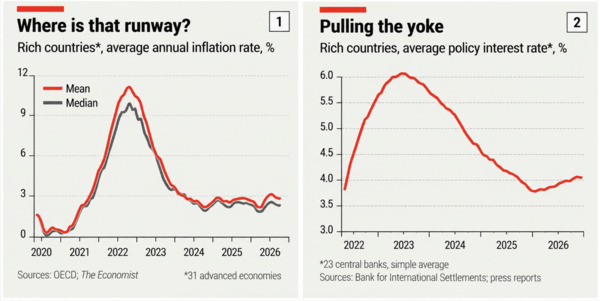
정책 결정자들이 이렇게 움직이는 것은 물가 상승 압력이 커지고 있다는 증거가 늘어나고 있기 때문이다. 선진국의 평균 연간 인플레이션율은 대부분 국가의 목표치인 2%를 향해 내려가던 흐름을 멈췄고, 최근 몇 달 동안 오히려 조금씩 상승했다.
8월 유로존의 연간 인플레이션율은 3.3%로 3년 만에 최고치를 기록했다. 스위스의 연간 인플레이션율은 불과 0.8%다. 이는 현대 세계의 경이 가운데 하나라고 할 만한 경제정책의 결과다. 하지만 이마저도 2년 만의 최고치다. 일부 국가에서는 물가 상승이 ‘생활비 위기(cost-of-living crisis)’의 우울한 기억을 다시 불러일으키고 있다. 예컨대 리투아니아의 인플레이션율은 1월 3.1%에서 현재 6%에 육박한다.
주범은 에너지지만, 에너지만의 문제는 아니다. 중동 전쟁으로 석유와 천연가스 가격이 상승했다. 유럽의 천연가스 가격은 이란 전쟁 이전보다 두 배 이상 높아졌다. 겨울을 앞두고 유럽 각국이 가스 저장시설을 다시 채우면서 가격은 더 오를 수도 있다. 이미 유로존의 에너지 물가상승률은 두 자릿수를 훌쩍 넘는다.
한편 일반적인 미국 소비자는 휘발유 1갤런에 4달러가 조금 넘는 돈을 내고 있다. 연초에는 3달러에도 미치지 않았다.
그러나 문제는 연료보다 더 광범위할 수 있다. 《이코노미스트》의 추산에 따르면 선진국 전체의 평균 연간 ‘근원(core) 인플레이션’은 2026년 초 2.7%에서 현재 2.9%로 상승했다. 근원 인플레이션은 에너지와 식품 가격을 제외한 물가상승률이다.
각국의 기저 인플레이션 압력을 좀 더 자세히 살펴보기 위해 우리는 선진국 23개국의 서비스 가격에 관한 비교 가능한 수치를 찾아봤다. 서비스 가격은 변동성이 큰 원자재 가격보다는 주로 노동비용에 의해 결정된다. 조사 대상 국가의 3분의 2에서 서비스 물가상승률이 오르고 있다.
이는 많은 국가에서 임금 상승률을 나타내는 지표가 계속 하락하고 있다는 사실에도 불구하고 나타나는 현상이다. 이 수수께끼 같은 결과를 설명할 수 있는 한 가지 가능성은 임금이 제대로 측정되지 않고 있다는 것이다. 또 다른 가능성은 서비스 부문의 생산성 증가율이 떨어지면서 기업들이 임금 인상을 흡수하기가 더 어려워졌다는 것이다.
지금까지 사람들이 앞으로 예상하는 물가상승률을 높여 잡고 있다는 증거는 거의 없다. 만약 그런 현상이 나타난다면 정책 결정자들을 정말로 긴장시킬 것이다. 시장에 기반한 대부분의 인플레이션 기대 지표는 최근 몇 주 동안 의미 있는 움직임을 보이지 않았다.
ECB가 최근 실시한 조사에 따르면 소비자들은 몇 달 전보다 향후 1년간 인플레이션이 더 낮을 것으로 예상하고 있다. 수백만 건의 뉴스 기사를 분석하는 컨설팅업체 ‘Alternative Macro Signals’의 지표를 비롯한 정교한 인플레이션 선행지표들은 세계적인 인플레이션 압력이 강화되고 있음을 가리키고 있다. 그러나 이런 도구들의 예측 실적은 일관되지 않다.
앞으로 어떤 일이 벌어지든 많은 중앙은행은 위험을 감수할 생각이 없다. 비판론자들은 2021~2022년 인플레이션이 급등했을 때 정책 결정자들의 대응이 너무 늦었다고 지적해왔다. 금리 결정자들은 같은 실수를 두 번 반복하고 싶어 하지 않는다.
슬로베니아 중앙은행 총재는 인플레이션이 고착화할 때까지 대응을 “기다려서는 안 된다”고 조언했다. ECB 집행이사회의 이자벨 슈나벨(Isabel Schnabel)도 최근 에너지 비용 상승이 임금으로 전이될 때까지 기다린다면 정책 결정자들이 다시 한번 대응 시기를 놓칠 수 있다고 경고했다.
따라서 새로운 통화긴축 사이클은 이제 막 시작되고 있는지도 모른다. 스위스 은행 UBS는 아직 긴축을 시작하지 않은 많은 중앙은행도 조만간 금리 인상에 나설 것으로 전망한다. 스웨덴 중앙은행은 물론이고 심지어 스위스 중앙은행까지 그 후보에 포함된다.
겉으로는 ‘연착륙’에 성공한 것처럼 보였지만, 인플레이션과의 싸움은 사실 한 번도 완전히 끝난 적이 없었다.
Who remembers the "soft landing"? In 2022-23 central bankers dreamed of bringing high inflation down without triggering a recession. Some countries came awfully close to achieving it. But with victory tantalisingly close, a growing number of central banks are now redoubling their fight against inflation. Price pressure is building. The world is a long way from the pain of four years ago, but the diagnosis is not promising.
On September 2nd New Zealand's central bank raised rates. Rate-setters on the other side of the Tasman sea have already increased borrowing costs three times this year. The Bank of Japan did so in June and the Bank of Korea in July and August. On September 10th the European Central Bank (ecb) is expected to raise its deposit rate to 2.5%. Many traders expect that, before long, the Federal Reserve will follow.
Policymakers are responding to growing evidence of rising price pressure (see chart 1). Average annual inflation across rich countries has stopped falling towards 2%, the target in most of them, and has instead edged up in recent months. In August annual inflation in the euro zone reached 3.3%, the highest in three years. Switzerland has inflation of just 0.8% a year, reflecting economic policy that is one of the wonders of the modern world. But even that is a two-year high. And in some places prices are evoking the sad memories of the "cost-of-living crisis". Inflation is close to 6% in Lithuania, for instance, up from 3.1% in January.
Energy is the main culprit, but not the only one. War in the Middle East has caused the price of oil and natural gas to rise. In Europe, natural-gas prices are more than twice as high as before the Iran war. They could go further as the continent's storage tanks are refilled ahead of the winter. Already euro-zone energy inflation is easily in double-digits. The typical American, meanwhile, is paying just over $4 for a gallon of petrol, up from less than $3 at the beginning of the year.
The problem, however, may be bigger than fuels. The Economist estimates that across the rich world, average annual "core" inflation, which strips out energy and food, has increased from 2.7% in early 2026 to 2.9% today. To examine countries' underlying inflationary pressure in more detail, we found comparable figures for 23 rich countries on services prices, which are largely determined by the price of labour (rather than more volatile commodities). Services inflation is rising in two-thirds of our sample. This is despite the fact that in many countries measures of wage growth continue to decline. (One explanation for this puzzling result is that wages are not well measured; another is that falling productivity growth in services makes it harder for firms to absorb pay rises.)
So far there is little evidence that people are revising up the price rises they anticipate in the future-the thing that would really spook policymakers. Most market-based measures of inflation expectations have not moved meaningfully in recent weeks. A recent survey by the ecb suggests that consumers expect lower inflation over the next year than they did a few months ago. Fancy leading indicators of inflation-including from Alternative Macro Signals, a consultancy, which analyses millions of news articles-do point to strengthening global inflationary pressures. But these tools' predictive record is patchy.
Whatever the future holds, many central banks are in no mood to take chances (see chart 2). Critics have argued that in 2021-22 policymakers dawdled in responding to surging inflation: rate-setters do not want to make the same mistake twice. They "shouldn't wait" for inflation to become entrenched before responding, Slovenia's central-bank governor has counseled. Isabel Schnabel, who sits on the ecb's board, recently warned that waiting until energy costs pass through to pay could once again leave policymakers behind the curve.
A new tightening cycle may, then, just be getting started. ubs, a Swiss bank, reckons that many of the central banks which have not yet started tightening will do so soon. Candidates include Sweden's, and even Switzerland's. For all the appearance of a soft landing, the fight against inflation never really ended.
#글로벌인플레이션 #금리인상 #통화긴축